How Do Scientists Search for Signals From Space?
Space is filled with radio signals. Scientists use enormous telescopes and powerful computers to determine which are natural, human-made or worth investigating further.
Read MoreBriefGlo – Clear, Concise and Useful Information
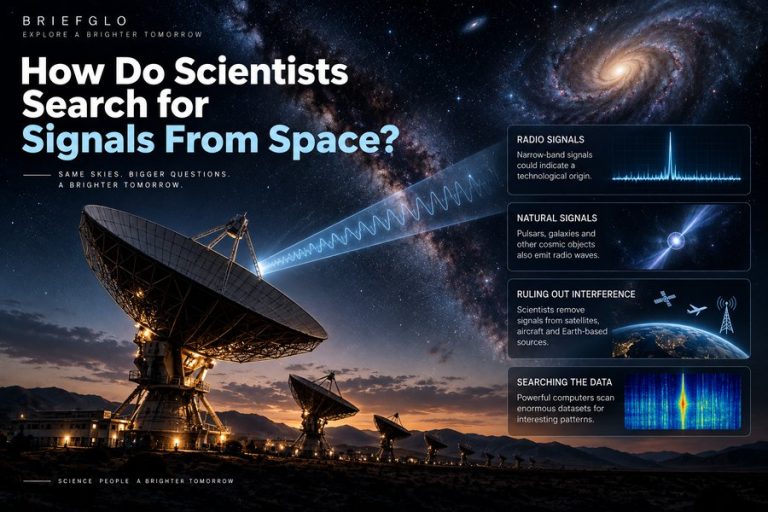
Space is filled with radio signals. Scientists use enormous telescopes and powerful computers to determine which are natural, human-made or worth investigating further.
Read More
If scientists can search distant planets for signs of life and technology, could another civilisation do the same to Earth? Here’s what might give us away.
Read More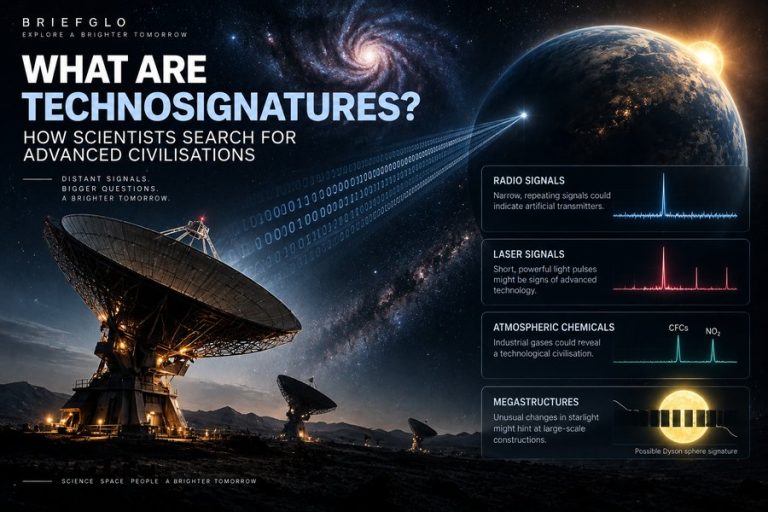
Radio signals are only one way scientists could detect distant technology. Technosignatures could also include lasers, unusual chemicals and other artificial traces.
Read More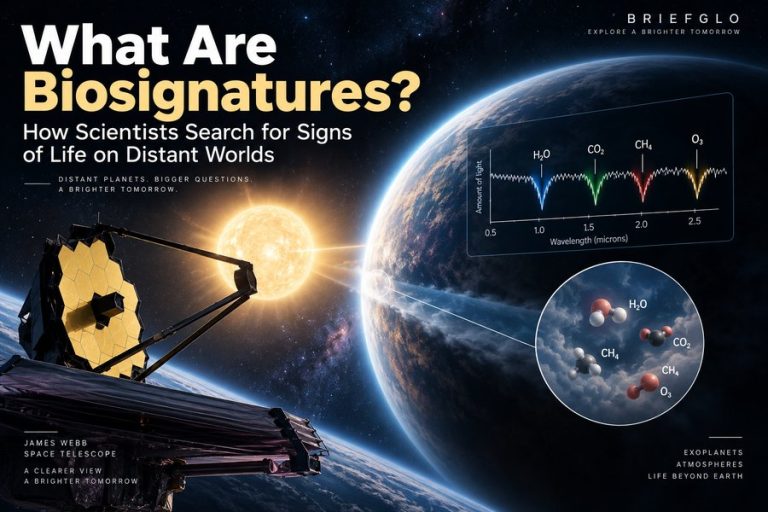
Scientists cannot visit distant exoplanets, but their atmospheres may contain clues to life. Here’s how biosignatures work and why they must be interpreted carefully.
Read More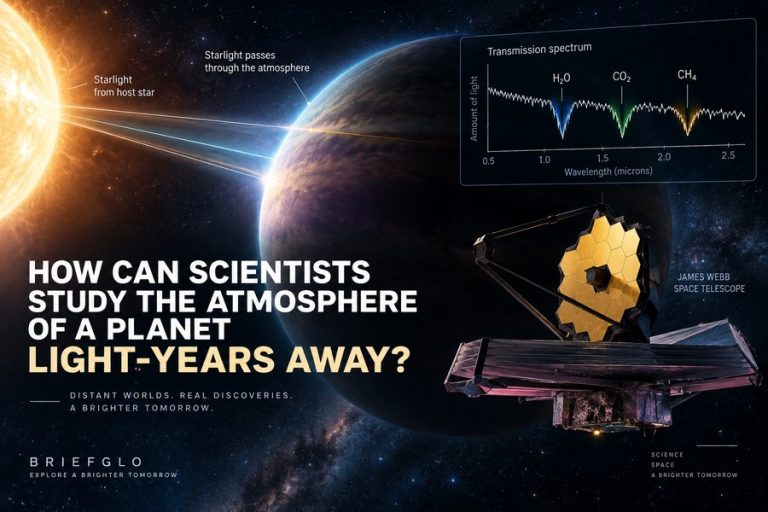
Scientists cannot collect air from distant exoplanets, but they can read their atmospheres in starlight. Here’s how spectroscopy reveals gases across light-years.
Read More
Rumours of a Trump alien disclosure speech are spreading, while the US government continues releasing real UAP files. Here’s what is confirmed and what isn’t.
Read More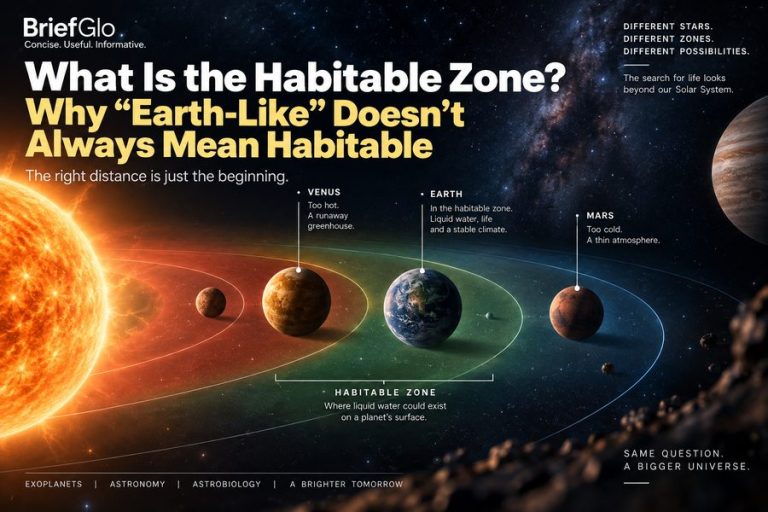
A planet can orbit inside its star’s habitable zone and still be hostile to life. Here’s what the Goldilocks zone really tells astronomers.
Read More
More than 6,200 exoplanets have been confirmed. Here’s how scientists find distant worlds and determine whether any could potentially support life.
Read More
Mars once had rivers and lakes. Now Perseverance has collected a rock sample containing potential biosignatures — but that is not yet proof of ancient life.
Read More